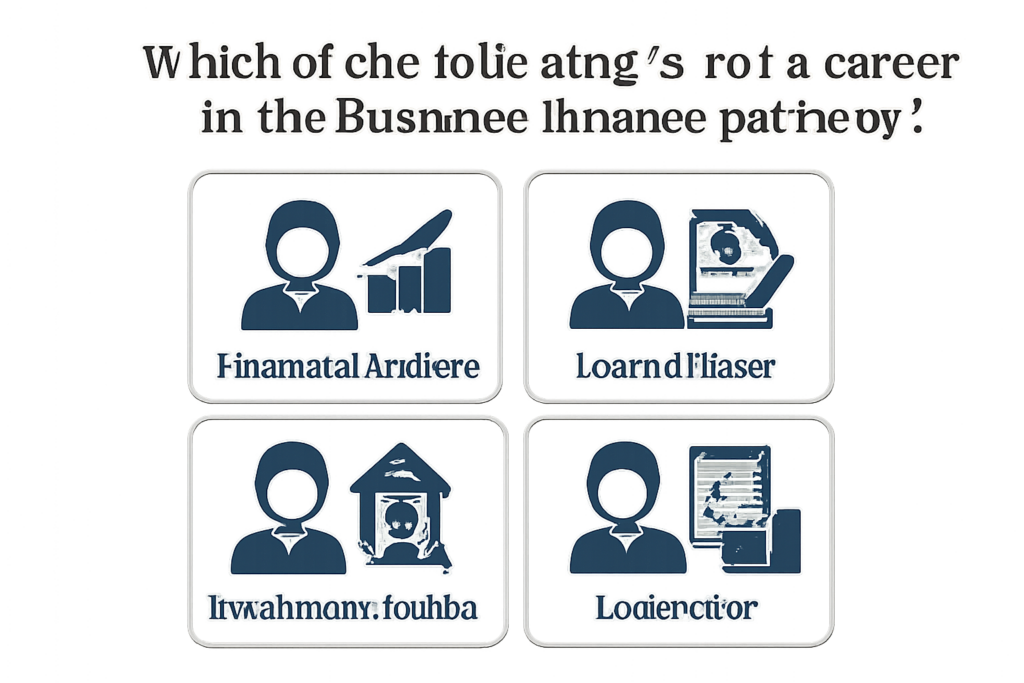
which of the following is not a career in the business finance pathway?
Understanding career paths is key when you’re planning your future in business. The business finance pathway is broad, but not every business job falls under its scope. When sorting out which roles do—and don’t—belong, you avoid wasted time chasing the wrong opportunities.
What Is the Business Finance Pathway?
The business finance pathway is a category within the larger business sector. It covers jobs focused on managing money, assets, investments, and risk. This usually includes financial analysis, planning, accounting, investment banking, and roles in corporate finance.
Common positions in this pathway might include:
- Financial Analyst
- Accountant
- Investment Banker
- Financial Planner
- Credit Analyst
These professionals handle budgets, analyze financial trends, and help companies or individuals make smart monetary decisions. Their day revolves around numbers, reports, and financial strategies.
Roles Commonly Confused with Business Finance
Since the business field is vast, it’s easy to confuse which jobs actually fit in this pathway. Here are a few careers often mistaken as part of business finance, but aren’t core to this track:
- Human Resource Manager
- Marketing Manager
- Sales Representative
While each of these roles is essential to business operations, their main functions don’t deal with financial management at the core.
Human resource management, for example, focuses on hiring and people development, not financial planning or investment analysis. Marketing and sales roles revolve around promoting products, generating leads, and closing deals—not analyzing balance sheets or managing cash flow.
Why Does the Distinction Matter?
Knowing which of the following is not a career in the business finance pathway reduces confusion as you plan your training or further education. Picking the wrong program, or mislabeling your interests, can waste time and resources.
If you’re aiming to become a financial analyst, you’ll want coursework focused on accounting, investment, and corporate finance. If you accidentally sign up for a program in human resources or marketing, you’ll end up covering topics unrelated to your goals.
Signs a Career Fits (or Doesn’t Fit) Business Finance
To determine if a career is truly in the business finance pathway, ask:
- Does this job require regular analysis of financial data?
- Is managing assets, budgets, or investments a core part of the role?
- Are you expected to advise on financial risk or growth strategies?
If the answers are mostly “no”—as with human resources or marketing—the job likely isn’t in the business finance pathway.
Bottom Line
The business finance pathway channels talent into roles centered on managing and maximizing money for companies or clients. Positions not primarily concerned with financial analysis or planning, such as human resources or marketing management, do not belong in this pathway.
Understanding the difference can direct you toward the coursework, skills, and experiences you actually need. Focus on roles aligned with your interests—the right fit pays off in both satisfaction and success down the line.
 Matthew Farrell
Is a talented author at Winder Sportisa, renowned for his insightful and engaging writing. With a deep passion for sports and a keen eye for detail, Matthew crafts content that resonates with a diverse audience. His commitment to accuracy and storytelling excellence has made him a valuable asset to the team. Matthew's work reflects the core values of Winder Sportisa, emphasizing community, integrity, and innovation. Through his writing, he not only informs but also inspires readers, contributing to the company's mission of creating a supportive and inclusive environment. His dedication and skill continue to elevate the quality of Winder Sportisa's content.
Matthew Farrell
Is a talented author at Winder Sportisa, renowned for his insightful and engaging writing. With a deep passion for sports and a keen eye for detail, Matthew crafts content that resonates with a diverse audience. His commitment to accuracy and storytelling excellence has made him a valuable asset to the team. Matthew's work reflects the core values of Winder Sportisa, emphasizing community, integrity, and innovation. Through his writing, he not only informs but also inspires readers, contributing to the company's mission of creating a supportive and inclusive environment. His dedication and skill continue to elevate the quality of Winder Sportisa's content.